Dutchess Land Conservancy
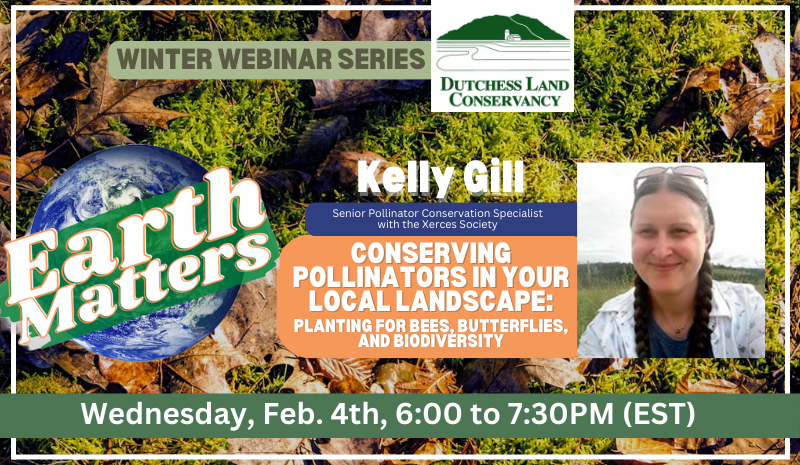
Wednesday, February 4, 6:00 PM EST Online Event
Join Kelly Gill, Senior Pollinator Conservation Specialist with the Xerces Society, for a step-by-step guide to planting for bees, butterflies, and biodiversity.
The value of conserving and protecting biodiversity is not limited to large acreages like nature preserves. As our landscapes continue to be altered by human land use, development, climate change, and many other factors, we are losing habitats that support the diverse plant and animal communities that are vital for maintaining natural resources that wildlife and humans mutually benefit from and need to survive.
Planting diverse habitats for pollinators can help bring essential biodiversity back to the landscape and can help bees, butterflies, and other beneficial invertebrates. Biodiverse landscapes have numerous ecological benefits beyond pollinator conservation, such as improving habitat value and connectivity for other species, creating wildlife corridors and refuges, and integrating climate-smart planting practices to improve the resilience of our landscapes.
During this webinar, we will learn:
• What are pollinator-friendly landscapes?
• Brief overview of pollinator declines and the need for conservation action.
• Pollinator habitat needs and basic design considerations.
• Featured pollinator plants for different landscape designs and purposes.
• Considerations for specialist native bees.
• Success stories - if you plant it, they will come.
• Examples of different pollinator plantings across the landscape (small to large, rural to urban settings), including meadows, hedgerows, home and community gardens, roadsides and ROWS, infrastructure projects, etc., and their multiple benefits.
Kelly Gill is a Senior Pollinator Conservation Specialist with the Xerces Society for Invertebrate Conservation and a Partner Biologist with the USDA Natural Resources Conservation Service. Kelly provides technical assistance to NRCS staff, partners, producers, land managers, and communities for implementing conservation practices for pollinators, beneficial insects, and other wildlife. This technical support includes planning, designing, and installing habitat plantings such as wildflower meadows, flowering hedgerows, riparian buffers, and native plant gardens. Kelly also works with agency staff and research partners on the development of technical guidelines, outreach materials, and training programs to guide pollinator conservation efforts. Kelly earned a Master’s Degree in Entomology from Iowa State University.
The DLC's Earth Matters webinar series is sponsored by LaBella Associates, Mutual of America, and Structure Works Construction.
 © Dutchess Land Conservancy. All Rights Reserved.