Preserving land along the Appalachian Trail in Beekman.
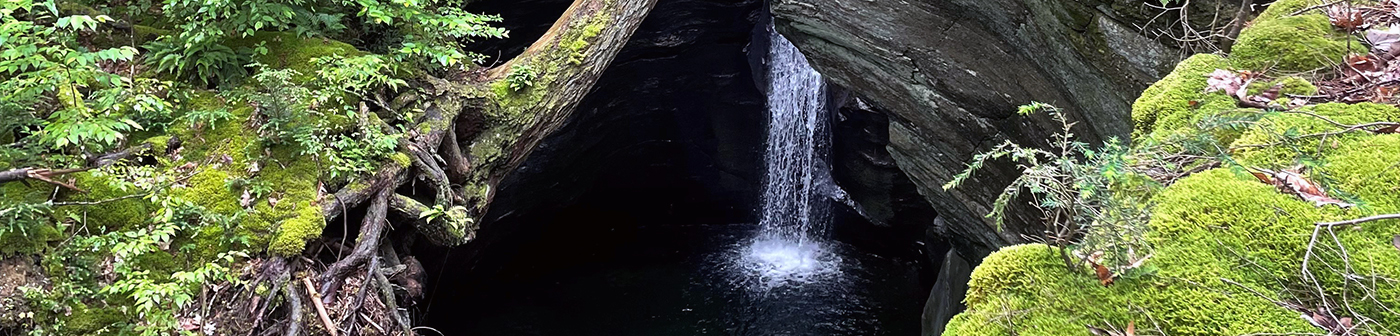
There is a glow that shines from the eyes of Sean Johnston as he talks about the land upon which he lives; land he knows and loves so deeply. He understands the shape of the land, the steep rocky slopes of West Mountain, the streams that flow down those slopes and the vast living forest that grows there. He knows how time affects the land, the flow of the seasons that tell him which berries are ready to be harvested or where new bushes should be planted. He studies the history and stories of the people who occupied his property in bygone years, too.
This past fall, Johnston made the commitment to forever protect his 73 mostly forested acres. “I’ve been blessed to live on this land and establish a way of life here that I hope to pass on to others,” he begins. “It’s a special place, filled with history and I wanted to see it preserved and unchanged.” Working with Erin Hoagland, the DLC’s Senior Director of Conservation and Stewardship, to preserve his property, he continues, “Erin was an absolute professional and a lovely, lovely person. She genuinely cared about my intentions for the land. Assuring its protection through the DLC is a huge comfort to me.”
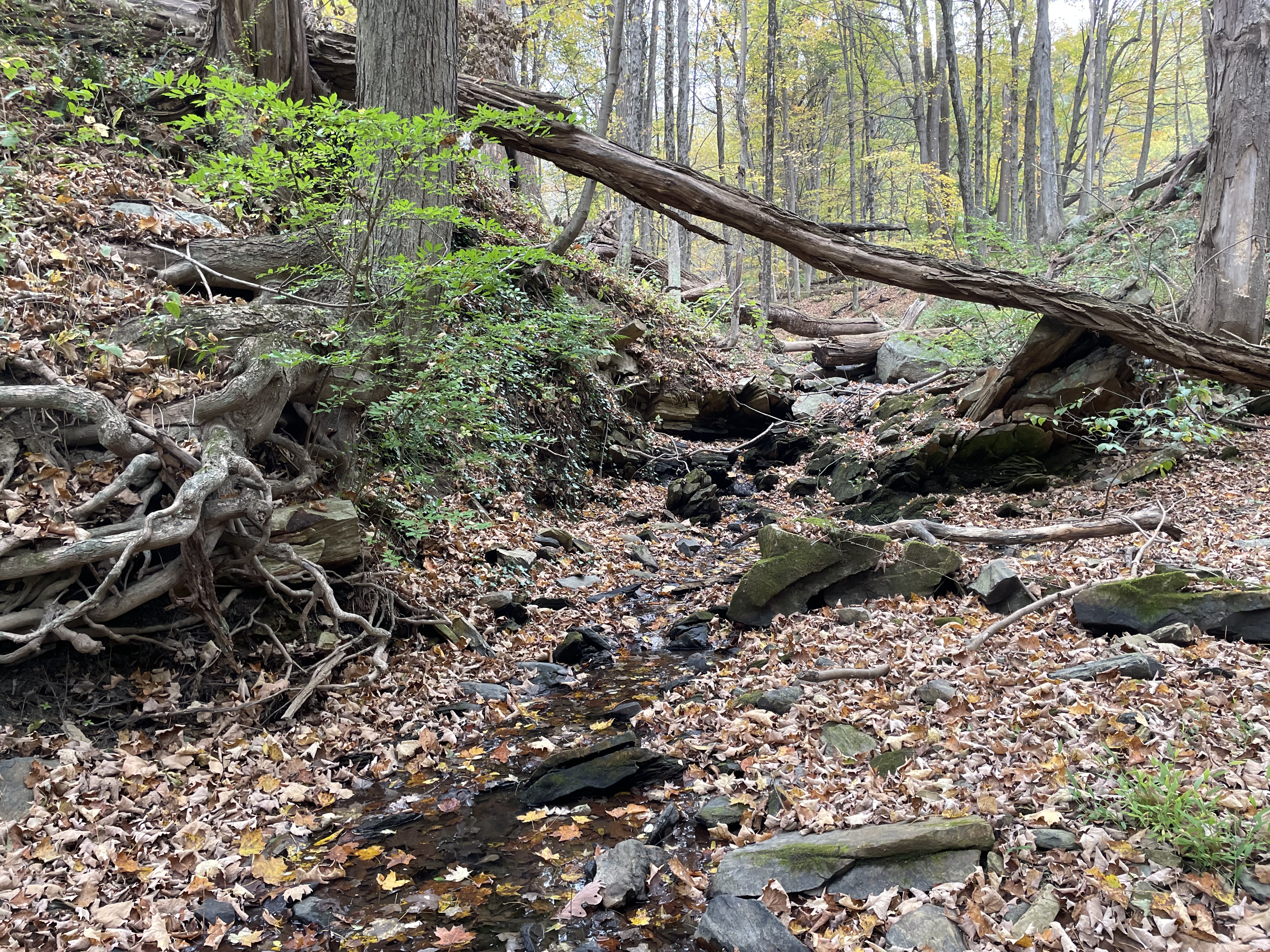
Located in the Town of Beekman, abutting the Appalachian Trail corridor near Nuclear Lake and in close proximity to West Mountain State Forest, the conservation of Johnston’s land and its expansive forest was crucial not just for the DLC, but for a number of ecological organizations as well. The Forest Conservation Easements for Land Trust Program which is administered by the Land Trust Alliance in partnership with the New York State Department of Environmental Conservation, the Appalachian Trail Conservancy’s Wild East Action Fund and Scenic Hudson’s Climate and Environmental Justice Fund came together to provide funding for the project. “The protection of this property adds to a critical mass of 2,300 acres of protected forest between the Appalachian Trail corridor to the south and West Mountain State Forest at the north, providing important connectivity for passage of animals across the landscape and securing thriving habitat,” Hoagland explains. “Sean’s love for his land and commitment to its preservation is an amazing example of the power of private land conservation and its ability to ensure the future of sensitive ecosystems and enhance local communities,” added DLC President Becky Thornton.
 Johnston has a profound attachment to this land and the people who lived here. “Helen Watkins was a wonderful artist and an amazing person,” he notes of the prior owner he inherited the property from. “She designed gorgeously elaborate window displays for the large department stores in Manhattan – Saks Fifth Avenue, Bergdorf Goodman, Tiffany and more.” Some of her designs are displayed in his home, as well as a portrait of Charles Lindbergh, signed by the famed aviator who sat for Helen at the height of his fame.
Johnston’s knowledge of the people and history of this land runs even deeper still. “A road ran through the property at one point that was used by troops in the Revolutionary War to move men and material from Connecticut to the supply depot in Fishkill. My brother has found cut pennies and two-cent pieces here that date from that period,” he recalls. “It was part of the Beekman Patent and was eventually purchased by the Gardner family. After some time, it ended up in the hands of Helen’s aunt and uncle, Clarinda and George Richards. George was the best friend of Eddie Rickenbacker, the famous World War I fighter pilot.” Johnston explains that the oldest building on the property was once a schoolhouse. “It burned down at one point, unfortunately, and they rebuilt it using the scorched timbers since wood in these parts was so scarce at the time. Most of the trees had been cut down to feed the Beekman Furnace down on Furnace Road.”
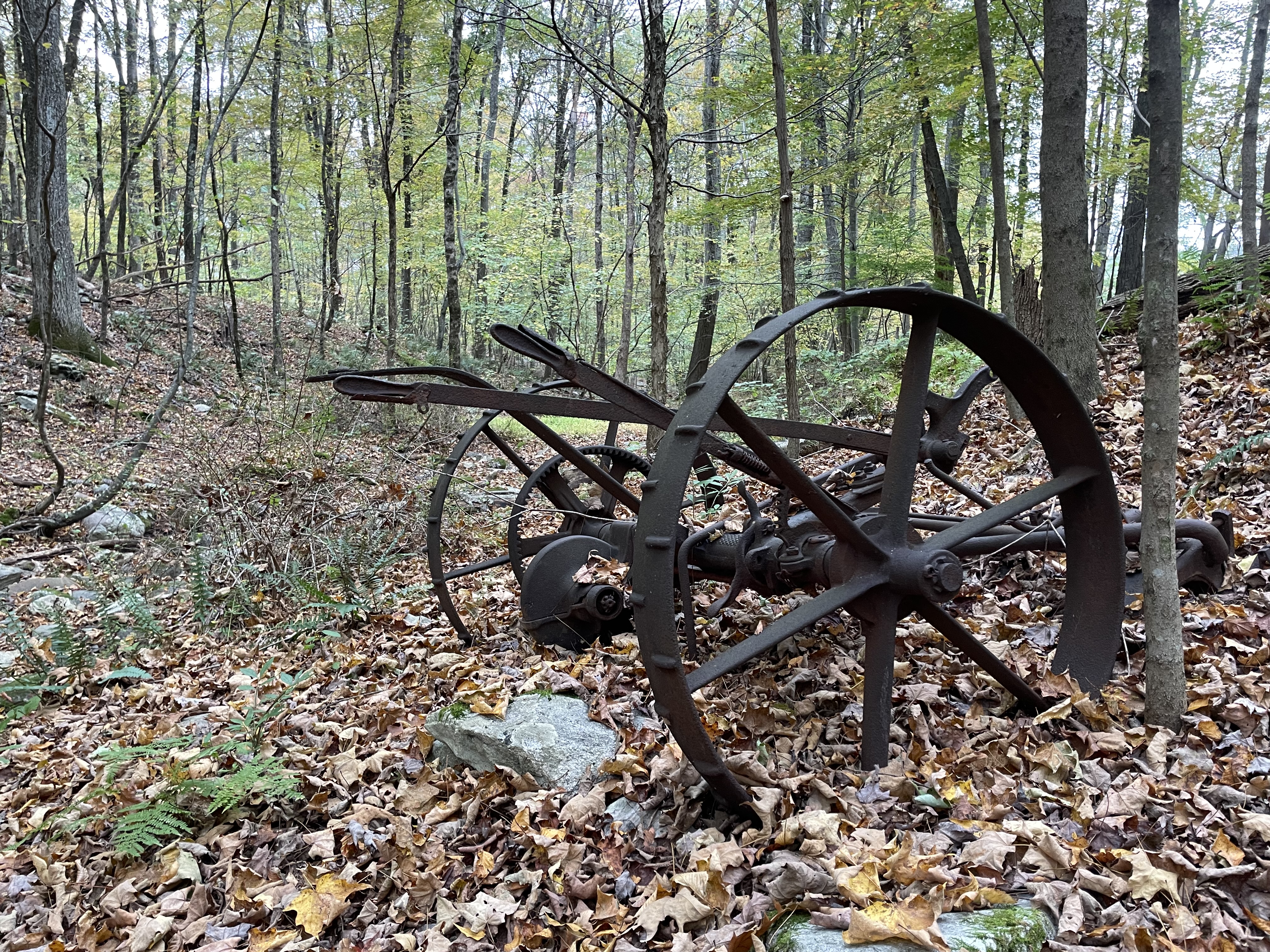
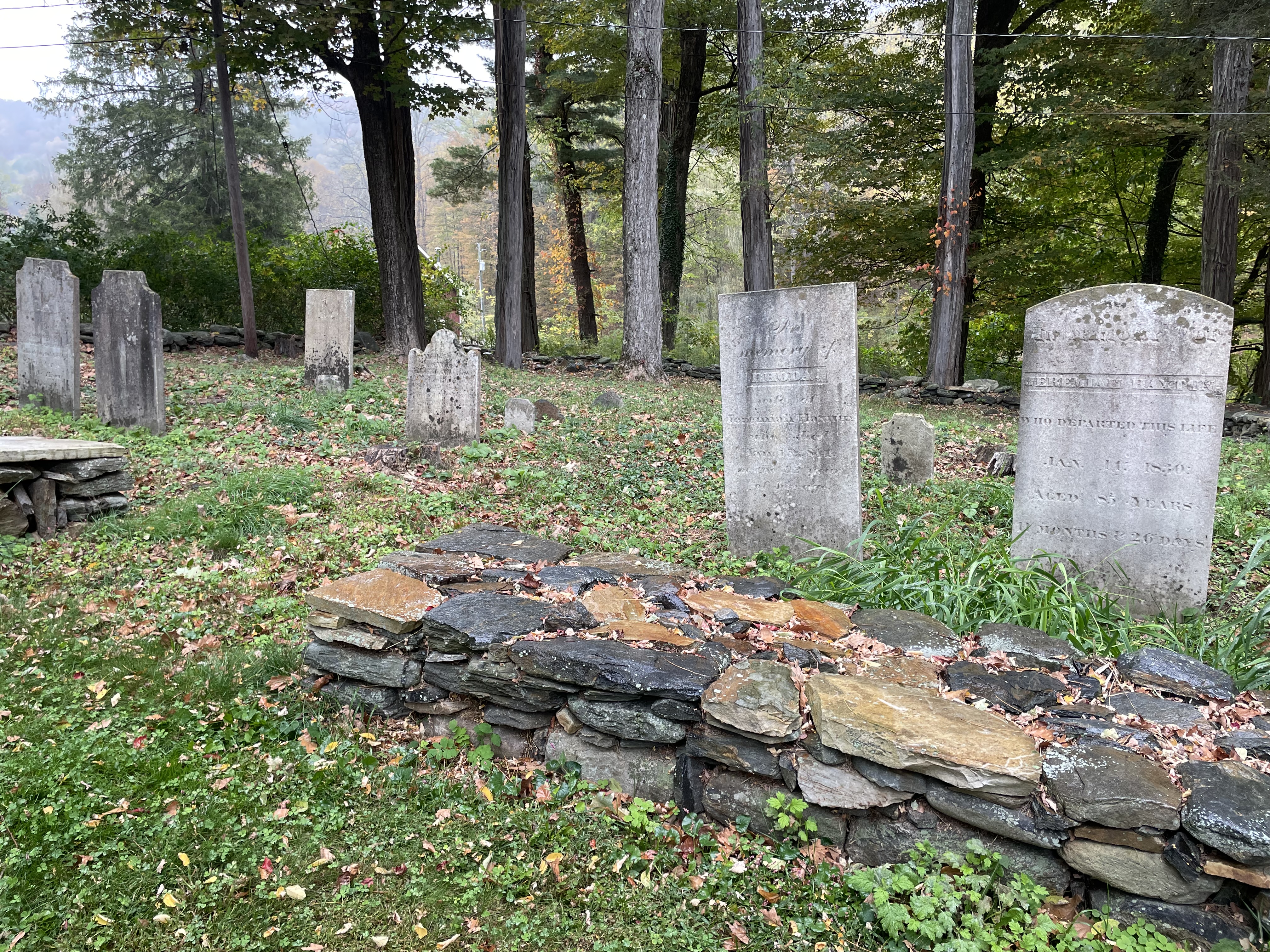 Tending to the land and restoring its historical aspects are among Johnston’s most treasured tasks. Nowhere can this be better seen than in his loving attention to the small cemetery found on the property and accompanying artifacts and ruins. He has cleared much of the plant growth that hid the gravestones for years and has tended to them as if they belonged to members of his own family. “There are 31 souls buried here, many of them children who didn’t get the chance to grow up.”
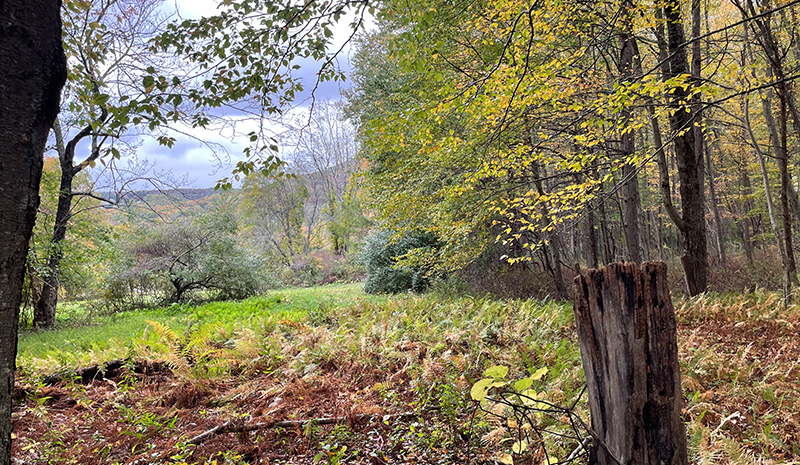
Another of Johnston’s pastimes is the fruit crops he grows in the few acres of cleared fields. “We had a fantastic batch of raspberries this year. They were fruiting right up until the first frost.” He plans to add additional rows of blueberry and raspberry plants in the spring. “It’s very important to me that we grow food on the property organically.”
More than anything, though, it is the deep forest here on the slopes of West Mountain that has captured Johnston’s imagination. He hopes to have a trail built on a corner of the property that will connect the Appalachian Trail with other public trails in West Mountain Forest, allowing people to experience the woods he knows so well. He deeply treasures the trees here and has fond memories of time spent among them with his children. “Once, I was sitting in the meadow on the edge of the grove of larches back in the woods with my daughter, and I told her, ‘If you’re quiet, you can hear a unicorn in the trees there.’ The wind blew, and she gasped with delight.” It is those personal connections – family, friends and previous residents – that tie him so greatly to this land. “You know,” Sean says with a characteristic twinkle in his eye, “We’re only given so many chances in this life and not all of us take the chances we’re given. I get great comfort from knowing that I took the chance to preserve this land.”
 © Dutchess Land Conservancy. All Rights Reserved.